

March 26, 2026
Giving back feels good. Saving on your taxes? That feels pretty great, too.
When you donate to Goodwill of Central and Northern Arizona, you’re doing more than cleaning out your closet or clearing space in your garage. You’re supporting no-cost career services and education initiatives that help local Arizonans build brighter futures. And depending on what and how you give, your generosity may also come with valuable tax benefits.
Let’s break down what you need to know about Goodwill donation tax benefits, tax write-offs and how to make the most of your charitable giving.
One of the most common questions people ask is: Are donations to Goodwill tax-deductible?
In many cases, yes.
Qualified charitable contributions to Goodwill of Central and Northern Arizona may count as tax-deductible donations if you itemize deductions on your federal tax return. That includes non-cash charitable contributions like clothing, shoes, household goods, furniture and even vehicles, as well as eligible monetary gifts.
Understanding the difference between tax credits and tax deductions is key:
Both can play a role in year-end tax planning, but they work differently. If you’re focused on maximizing charitable tax deductions, knowing how to properly document and report your gifts is essential.
If you plan to claim a tax write-off for charitable giving, here’s the general process:
Goodwill of Central and Northern Arizona is a qualified nonprofit organization, which is an important first step when claiming itemized deductions for donations.
To claim tax-deductible donations on your federal return, you typically must itemize rather than take the standard deduction. A tax professional can help you determine which option makes the most sense for your situation.
This is where many people get tripped up. IRS donation guidelines require specific records depending on the value of your donation. You can estimate the value of your donations here.
No matter the size of your donation, documentation matters.
Here’s a simple Goodwill donation checklist to help you stay organized:
For monetary donations, you’ll typically receive a receipt by email or mail after your gift is processed. Keep that confirmation with your tax records.
For non-cash charitable contributions totaling more than certain IRS thresholds, additional forms or documentation may be required. If the value exceeds specific limits, you may need written acknowledgment from the organization or even a qualified appraisal.
When in doubt, consult a tax advisor. Tax deduction documentation is one of the most important parts of successfully claiming your donation.
One of the biggest questions around Goodwill tax deduction rules is: How do I determine fair market value?
Fair market value donations are based on what someone would reasonably pay for the item in its current used condition. That means:
You cannot deduct the original purchase price of an item. Instead, you estimate its current resale value.
To determine how to value donated items:
Being realistic and consistent is important. Overvaluing items can raise red flags, while undervaluing means you may miss out on legitimate tax benefits.
Cleaning out your closet isn’t just therapeutic. It can also support your year-end tax planning strategy.
The tax benefits of donating clothes, shoes, accessories and household goods include:
When you donate gently used items to Goodwill of Central and Northern Arizona, those goods are sold in stores to fund programs that help individuals gain job skills, prepare resumes, practice interviewing and connect with employers.
It’s a powerful example of how donations help your taxes and your community at the same time.
If you’re considering donating a car, truck, RV or other vehicle to Goodwill, that may also qualify as a non-cash charitable contribution.
Vehicle donations can sometimes result in a larger tax deduction, depending on the vehicle’s value and how it is processed. After donating, you’ll receive documentation that can be used when reporting the contribution on your taxes.
Because vehicle donations involve additional IRS donation guidelines and paperwork, it’s especially important to consult a qualified tax professional to determine:
As always, keeping copies of all paperwork is essential.
Thinking about ways to make the most of your giving? Here are a few smart year-end tax planning tips:
Plan ahead: Don’t wait until the last week of December. Make donations early enough to ensure you receive proper documentation before filing.
Group donations thoughtfully: If you’re close to itemizing, bundling multiple charitable contributions into one tax year may help maximize charitable tax deductions. A tax advisor can help you evaluate this approach.
Keep detailed records: Organized records make tax season less stressful. Save digital and paper receipts in one place.
Review IRS thresholds: Different rules apply depending on the total value of your donations. Understanding these guidelines can prevent surprises later.
When tax season arrives, reporting your charitable contributions generally involves:
Accuracy matters. Taking time to carefully document your gifts can make the filing process smoother and more confident.
Remember, Goodwill of Central and Northern Arizona does not provide legal or tax advice. Always check with a licensed tax professional regarding your specific situation and current IRS regulations.
While the financial benefits are helpful, the real return on your donation is measured in lives changed.
Every donation supports programs that help Arizonans:
Your charitable giving fuels opportunity. It strengthens families. It builds more resilient communities across Central and Northern Arizona.
Yes, understanding how to claim donations on taxes is important. Yes, maximizing charitable tax deductions can be part of smart financial planning. But the greatest payoff is knowing your generosity directly supports someone’s path to self-sufficiency.
Before you donate, here’s a quick recap:
Giving is powerful. Planning is smart. And when you combine the two, you create an impact that lasts far beyond tax season.
When you donate to Goodwill of Central and Northern Arizona, you’re investing in your community and potentially unlocking valuable Goodwill donation tax benefits along the way. That’s a win-win worth celebrating.
July 28, 2026
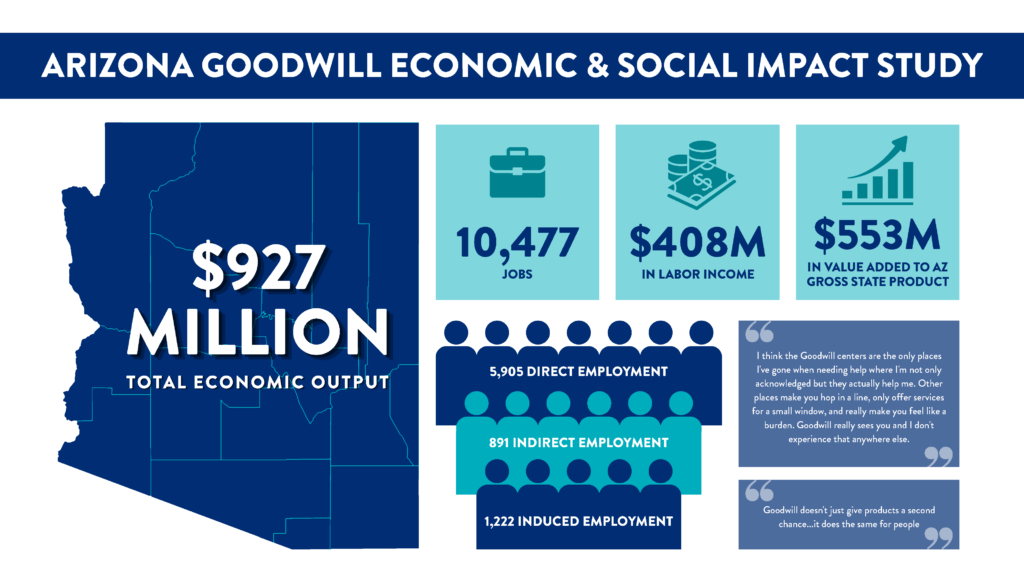
Study also finds Goodwill operations support more than 10,000 jobs statewide PHOENIX, Ariz. (July 28, 2026) — Goodwill of Central & Northern Arizona (“GCNA”) and Goodwill Industries of Southern Arizona (“GISA”) today released […]
April 24, 2024
We’ve forged a ground-breaking partnership with Arizona State University’s School of Sustainability, the City of Phoenix, Wells Fargo, and Hustle PHX to launch a first-of-its-kind plastics microfactory right here in […]

March 8, 2019
Decorating a home on a budget is not always easy. Finding things you love, while not overspending can seem like an impossible task. With a little bit of effort, you can turn gently used items into beautiful home decor pieces.